What Is Orofacial Myofunctional Therapy? A Simple Guide for Parents
Your dentist just said your child might need something called myofunctional therapy, and now you're sitting in the parking lot googling a word you've never heard before. First of all, take a breath. This is one of those terms that sounds far more complicated than it actually is, and plenty of parents land right where you are, a little confused and wondering if it's a big deal.
Here's the plain-English version. Orofacial myofunctional therapy is a gentle, exercise-based way of helping the muscles of the mouth and face, the tongue, lips, and jaw, learn to work the way they're supposed to. When those muscles fall into the wrong patterns, it can quietly affect how your child breathes, chews, swallows, speaks, and even sleeps. The good news is that these patterns can be retrained, and the process is a lot more approachable than that mouthful of a name suggests. This guide walks you through what it is, why a professional might recommend it, and what getting started actually looks like for your family.
What sounds, like really is?
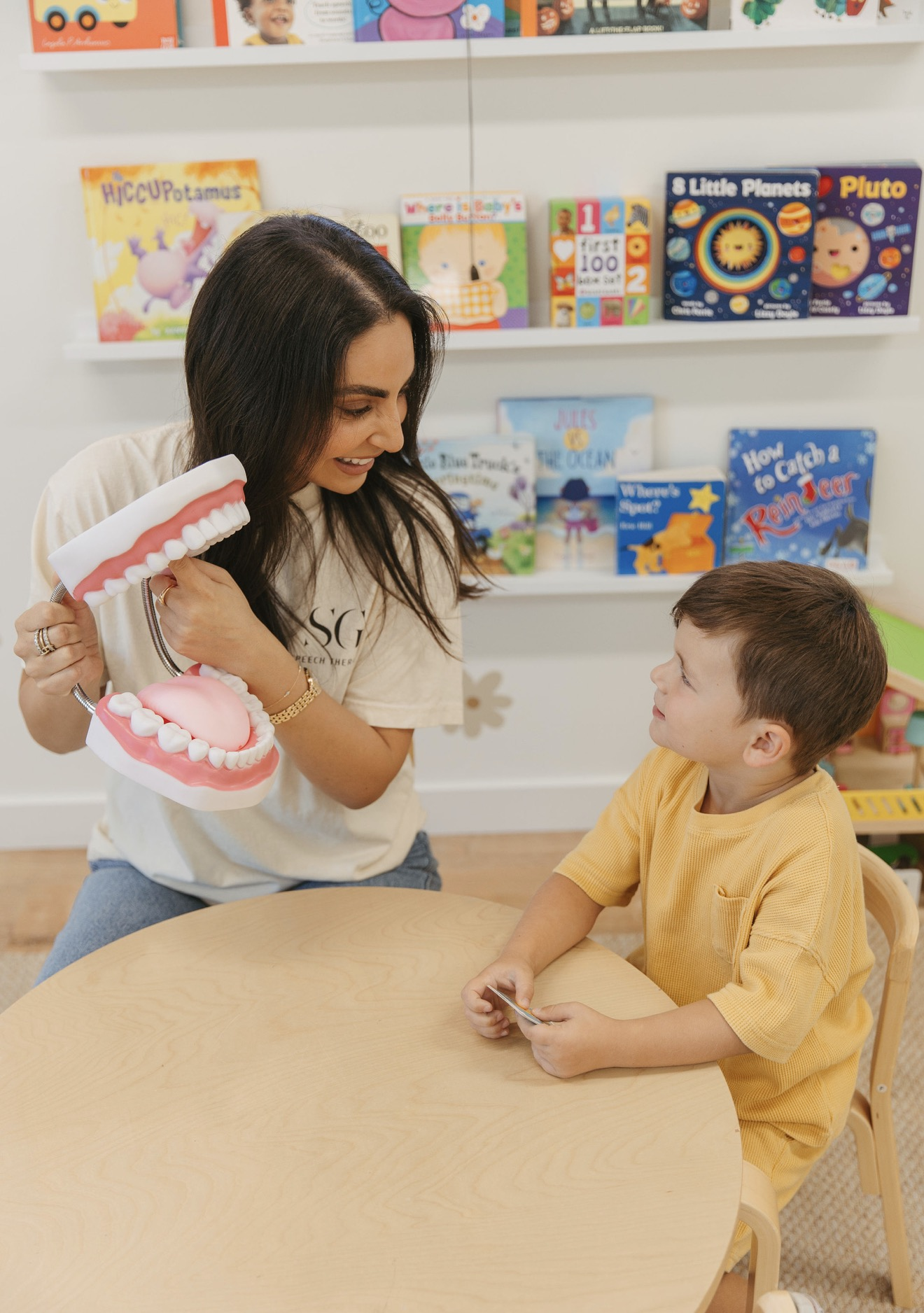
The easiest way to picture it is this: think of it as physical therapy, but for the mouth and face. Just like a physical therapist helps a body move more efficiently, a myofunctional therapist helps the tongue, lips, and jaw find better habits so everyday things like breathing and swallowing feel natural instead of effortful.
Most of the time, the work centers on a few common patterns. Maybe your child's tongue tends to rest low in the mouth instead of gently up against the roof. Maybe their lips fall open at rest rather than staying softly closed. Maybe they've drifted into breathing through their mouth instead of their nose. On their own, these habits look tiny, almost too small to matter. But they show up all day, every day, so over time they can shape how your child rests, eats, talks, and sleeps.
At SG Speech Therapy, we make a point of explaining all of this in language that actually makes sense to parents, not clinical jargon. Through guided practice and lots of friendly repetition, kids gradually build better tongue posture, a stronger lip seal, and steadier habits that start to feel automatic. That's really the whole goal, helping those patterns become second nature.
Why a dentist or doctor might bring it up
It often surprises parents that the first person to mention myofunctional therapy isn't a speech therapist at all. It's frequently a dentist, orthodontist, ENT, or pediatrician. That's because the muscles of the mouth don't just affect the mouth. They're tied into breathing, sleep quality, swallowing, and your child's overall comfort and health, so the people who look closely at any of those areas tend to notice when something's off.
Dental professionals in particular pay attention here, and for good reason. The tongue, lips, and jaw all play a role in how teeth line up and how the jaw grows. When a tongue rests low instead of up against the palate, it can nudge jaw growth and tooth spacing in ways that add up over the years. So a dentist flagging it early isn't overreacting. They're catching something while it's still easy to influence.
This is also why myofunctional therapy usually works best as a team effort. SG Speech Therapy partners with families and with your child's other providers so everyone's on the same page and the care feels connected rather than scattered across a dozen appointments that don't talk to each other.
Common signs parents tend to notice first
You don't need a clinical label to sense when something isn't quite right. Most parents pick up on the little clues long before anyone gives them a name. A few patterns come up again and again.
One is what's often called tongue thrust, where the tongue pushes forward against or between the teeth during swallowing. It frequently travels alongside mouth breathing and an open-mouth resting posture, where your child's lips sit apart even when they're relaxed and calm. These aren't just cold-season habits that come and go. When they show up day after day, they can become the body's default. You might notice your child's lips parted while they watch TV, hear them breathing through their mouth as they sleep, catch some snoring or restless nights, or see the tongue pushing forward every time they swallow. If a few of those sound familiar, it may be worth having things looked at.
Another cluster of signs has to do with oral habits that simply stuck around longer than expected. Thumb sucking or pacifier use past age three or four can shape tongue posture, lip seal, and the way the jaw develops, and over time those habits sometimes tie into speech as well. You might hear it in certain sounds, a lisp or fuzzy S, Z, or SH, or notice your child chewing on objects or biting their nails. None of this means you did anything wrong as a parent. Habits like these are incredibly common. They're just a signal that your child's mouth muscles and speech might benefit from a little support, and that's exactly the kind of thing therapy can help with. Families across Calabasas, the San Fernando Valley, and the Conejo Valley come to SG Speech Therapy to figure out whether these small clues add up to a bigger pattern worth addressing.
What getting started actually looks like
If you decide to look into it, the path is more straightforward than you'd expect. It starts with an evaluation, which leads to a plan built specifically for your child, followed by regular sessions and some practice at home in between. Starting earlier tends to make things easier, since kids are still growing and their habits are still taking shape, which means there's more room to gently steer them in a healthier direction.
Before the first appointment
You really don't need to walk in knowing all the terminology. What helps most is a little observation. Think about any concerns your dentist, orthodontist, ENT, or pediatrician has raised, and jot down what you've noticed at home around mouth breathing, snoring, or that open-mouth resting posture. It's also worth bringing along any questions you have about your child's speech, chewing, swallowing, or oral habits, plus any past evaluations or treatment plans if you have them handy.
A certified myofunctional therapist uses all of that to guide the assessment. And to be clear, you're not expected to sort this out on your own. At SG Speech Therapy, parents are treated as partners from the very first conversation. That first appointment is really just about understanding the patterns and deciding together whether therapy makes sense for your child.
How the therapy itself works
The engine behind myofunctional therapy is something called neuromuscular re-patterning, which is a fancy way of saying that when kids practice new tongue, lip, and breathing habits often enough, the body slowly starts using them on its own. Sessions teach and shape the exercises, but it's the daily repetition at home that makes the new patterns actually stick. That's the part worth remembering, because it means your involvement genuinely matters.
Most kids come in weekly or every other week, with short practice sessions at home in between. Many programs run over several months, though some children show early shifts in their breathing or posture within the first few weeks, which can be really encouraging to watch.
It usually begins with a thorough assessment. A speech therapist looks at how your child breathes, rests, chews, swallows, and speaks, hunting for the underlying muscle patterns rather than just naming the symptoms. This step matters more than it might seem, because two kids can show the exact same outward sign for completely different reasons. One child's issue might trace back to tongue thrust, while another's comes from mouth breathing or a long-standing oral habit. If you're searching for a speech therapist in Calabasas, SG Speech Therapy approaches this evaluation with a whole-child lens, taking your child's health, development, daily routines, and home life into account before anyone lands on a plan.
From there, the therapist builds a plan around your child's age, needs, and goals, because there's no single version that fits every kid. Some children need more focus on tongue posture, while others need work on lip strength, nasal breathing, or their swallowing pattern. The exercises are taught in session and then practiced at home, and they tend to be simple, things like practicing where the tongue should rest, gentle lip-seal activities, nasal breathing work, and swallowing practice. Because so much of the progress happens at home, SG Speech Therapy offers both in-clinic and teletherapy options, which gives families across Calabasas, the San Fernando Valley, and the Conejo Valley a realistic way to keep things going.
Coaching you, the parent, is a central part of all this too. Kids do best when the adults around them know what to look for and how to support practice without it turning into a nightly battle. As your child improves, the exercises get updated so sessions stay useful and targeted, and many parents start noticing changes in mouth posture, breathing, and sleep well before the full program wraps up. The whole model is built to leave you feeling supported rather than overwhelmed.
How this helps your child, beyond just one skill
The nice thing about myofunctional therapy is that its benefits tend to ripple outward. Better muscle function doesn't just improve one narrow thing. It can support speech, chewing, swallowing, breathing, sleep, and overall oral health all at once, because for a lot of kids those pieces are more connected than they appear.
When oral function improves, ordinary tasks often start feeling easier. Steadier tongue posture and a better lip seal can support clearer speech, smoother chewing and swallowing, and more consistent breathing. Parents frequently mention better sleep and less of that open-mouth resting once things click into place. You might notice cleaner speech sounds, including some lisp patterns easing up, more efficient eating, better nasal breathing during rest and sleep, and improved lip seal overall.
Parents often ask whether myofunctional therapy can actually fix a lisp, and the honest answer is sometimes yes, especially when the lisp is tied to tongue thrust or where the tongue is placing itself. In those cases, working on the muscle pattern and the speech sound together tends to work better than tackling either one alone, and SG Speech Therapy can help you understand when both pieces are worth addressing.
There's also the growth side of things. Muscles help guide how the mouth and face develop, so when the tongue rests in a healthy spot and the lips stay closed more of the time, the jaw and surrounding structures have better support as they grow. This is a big part of why therapy can matter for dental health and facial development. It doesn't replace orthodontic treatment, but it can protect it. If the underlying habits never get addressed, teeth have a way of drifting back even after braces or expanders. Healthier oral posture creates a more stable foundation for any orthodontic work down the road. So if your child has crowded teeth, an open-mouth posture, mouth breathing, or a noticeable tongue thrust, it's fair to ask whether myofunctional therapy should be part of the bigger plan. A clear evaluation can help connect those dots for you.
The bottom line for parents
If there's one thing to take away, it's that you don't need to become an expert overnight. Understanding the basics of what myofunctional therapy is, and recognizing a few of the signs, already puts you in a strong position to make good decisions for your child. With a plan tailored to your child, some steady practice at home, and support from a team that actually explains things, kids can make real, noticeable gains in how they speak, chew, swallow, and breathe. If any of this sounded familiar as you read it, that's reason enough to ask a question or two. You're welcome to book a free 15-minute phone consultation with SG Speech Therapy anytime, and we'll help you figure out whether this is something worth exploring for your child.
Frequently Asked Questions
What age can a child start orofacial myofunctional therapy?
Children can usually begin around age four or five, once there are clear concerns to work on. Starting early can be a real advantage, since habits and growth patterns are still forming and easier to shape. A certified myofunctional therapist can tell you whether your child is ready for regular sessions.
Is myofunctional therapy the same as speech therapy?
Not quite. Speech therapy focuses on communication and how sounds are produced, while myofunctional therapy focuses on how the mouth muscles function, the tongue, lips, jaw, and breathing. Some kids need just one, and others do best with both working together as part of a coordinated plan.
Can myofunctional therapy fix a lisp?
It can help, especially when the lisp is connected to tongue thrust or where the tongue is resting. Improving the muscle pattern supports clearer speech. That said, some children also need speech therapy alongside it, so the speech sounds and the underlying habit both get addressed.
How long does myofunctional therapy usually take?
Most programs run over several months, with weekly or every-other-week sessions plus short practice at home in between. Every child moves at their own pace, but many parents notice early changes in breathing, posture, or sleep within the first few weeks, even before the full program is complete.
