
In-Person or Online Speech Therapy? How to Choose What's Right for Your Child
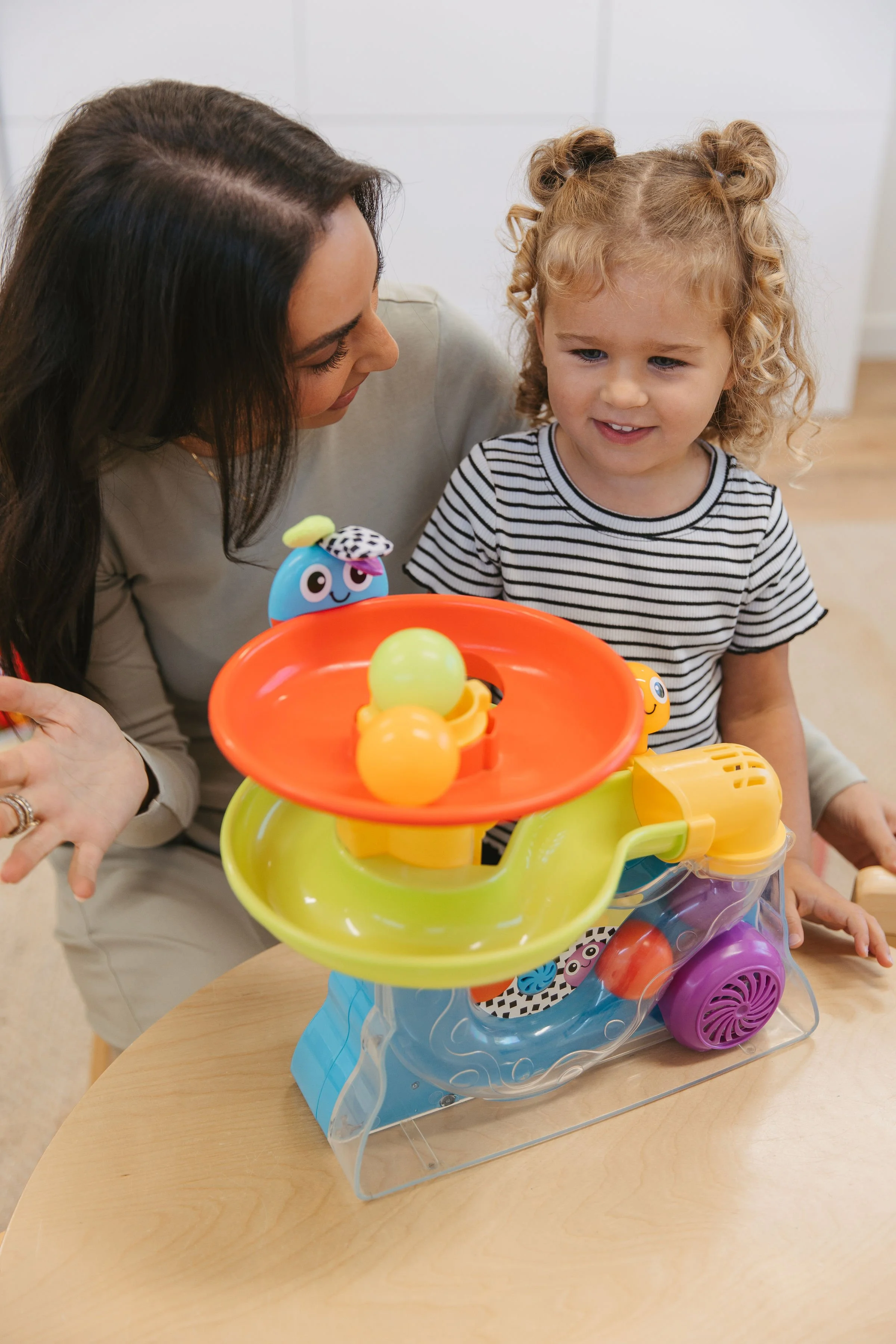
Picture this. It's 4:45 on a Tuesday, you're sitting in traffic on the 101, your child is melting down in the back seat, and you're already wondering whether you'll make it to the clinic on time. Somewhere in that moment, a quiet question pops up: would this be easier if we just did therapy from home? Or would my child actually do better in the room with the therapist?
If you've asked yourself some version of that, you're in good company. Choosing between in-person and online speech therapy is one of the first things parents wrestle with, and there's no single right answer. What you really want is simple: sessions that fit your life, help your child make real progress, and don't leave everyone frazzled by dinnertime. The good news is that both formats can get your child there. They just take different roads. Some kids come alive when their therapist is sitting right beside them. Others settle in beautifully at the kitchen table with a screen and a snack. If you're raising your family in the San Fernando Valley or Conejo Valley, understanding what each option does well makes this decision feel a lot less daunting, and that's exactly what this is here to help you do.
First, what is speech therapy really doing for your child?
Before we compare formats, it helps to step back and remember what speech therapy is actually for. At its heart, it's about helping your child connect, to be understood, to understand others, and to feel confident doing it. That might look like a two-year-old who isn't using many words yet, a preschooler who's hard for anyone but you to understand, or a school-age kid who keeps getting left out because conversations with friends move too fast.
A speech therapist starts by getting to know your child, finding where things are getting stuck, and building a plan around goals that actually matter for your family. Maybe it's a specific sound that won't cooperate, a vocabulary that needs room to grow, or learning the back-and-forth rhythm of a real conversation. There's no cookie-cutter version of this work. The best therapy bends to fit your child, their pace, and the way their brain likes to learn. Some kids thrive on structure and clear steps. Others need play, silly voices, pictures, and movement to stay in it.
Here's the part worth holding onto: starting sooner tends to matter. The earlier a child gets support, the more runway they have to build language and social skills before those gaps start showing up in the classroom or on the playground. So if you're reading this because something feels a little behind, trust that instinct. Looking into it now is one of the kindest things you can do.
What in-person speech therapy actually feels like
In-person sessions happen face-to-face in a space designed for one thing: helping your child focus and learn. And honestly, for a lot of kids, that change of scenery does half the work. There's no TV humming in the next room, no dog wandering through, no pile of toys calling their name. Just your child, the therapist, and a warm, kid-friendly space built to keep them engaged.
Because the therapist is right there, they can read your child like a book and respond in real time. They catch the little things, the way attention drifts, a shift in posture, and the flicker of frustration before it boils over, and adjust on the spot. When something isn't landing, they change course mid-activity. When your child needs a hands-on cue to shape a tricky sound, they can gently guide them through it. That kind of instant, in-the-room responsiveness is the whole magic of face-to-face care, and it's a big reason so many kids, especially younger ones, click with it.
It also plays nicely with other support. If your child is also seeing an occupational or physical therapist, in-person speech therapy slots neatly alongside that broader team. And when the work really leans on hands-on guidance, like oral-motor exercises, feeding therapy, or sensory work, being in the room together tends to pay off in ways a screen just can't fully replicate. For a child who needs that closeness to feel safe and stay regulated, walking into a familiar clinic and seeing a familiar face can be the thing that makes the whole session work.
What online speech therapy actually feels like
Now picture the other version. Your child is curled up in their favorite spot at home, tablet propped up, and their therapist pops onto the screen with a big hello and a game ready to go. No commute, no waiting room, no rushing out the door. That's teletherapy, and for a lot of families, it's been a quiet game-changer.
Online sessions run on simple, reliable technology, a steady internet connection, a quiet corner, and a device with a camera and mic. From there, the therapist uses interactive games, screen sharing, and digital whiteboards to guide your child, model sounds and words, and keep things genuinely fun. Done well, it doesn't feel like a watered-down version of therapy. It feels like its own thing, and plenty of kids make real, measurable progress this way, with clearer speech, smoother talking, bigger vocabularies, and stronger social skills.
What makes teletherapy shine is how it bends around real life. It cuts the commute, skips the waiting room, and slides therapy into a packed week without turning the whole afternoon upside down. For families spread across Tarzana, Encino, Malibu, and Thousand Oaks, that flexibility can be the difference between showing up consistently and constantly canceling. It's also a lifeline if you live farther out, juggle a hectic schedule, or have a child for whom getting out the door is its own ordeal. And because you're no longer limited to whoever happens to be nearby, teletherapy can connect you with the right specialist even if they're across the Valley.
The honest trade-off is that online therapy leans on a few things going right. The tech has to cooperate, because spotty internet or a glitchy device can stall a session and break your child's focus fast. And the screen itself asks something of your child; some kids tire of it, look away, or need to get up and move. That's why good online therapists build in movement breaks and keep activities lively. It's not a flaw in the format so much as a reminder that teletherapy fits some kids far better than others.
So which one is actually right for your child?
Here's where it gets personal, because the real answer depends less on the format and more on your particular kid. As a rough rule of thumb, younger children often get more out of in-person sessions. They tend to need more direct help, shorter transitions, and a firmer structure, and it's simply easier to guide a busy little body when you're in the same room. The same goes for children with attention challenges, more complex needs, or goals that depend on physical, hands-on guidance, especially when therapy overlaps with special education or broader developmental support.
On the other hand, plenty of kids do wonderfully online. If your child is comfortable with a screen, can sit and attend for a stretch, and has a parent who can hover nearby when needed, teletherapy can be a fantastic fit, and sometimes even less stressful than loading into the car twice a week. The deciding factor often isn't age at all. It's a mix of how your child focuses, how they feel about screens, and how much support is available at home during the session.
That last piece deserves a little extra honesty, because your role shifts depending on the format. With in-person visits, the therapist drives the session and then loops you in afterward with updates and a few things to practice at home. With teletherapy, you're a bit more hands-on in the moment, helping with the setup, clearing distractions, keeping your child engaged, and carrying strategies into the rest of the week. Neither is harder, exactly. They just ask for different things from you. So a fair question to sit with is: during therapy time, can I realistically be around to help? If yes, online opens up. If your weeks are unpredictable and your child needs more structure than you can provide on the fly, the clinic might be the steadier path.
And here's a reassuring truth that takes the pressure off: it doesn't have to be one or the other forever. Some families start in person to build a strong foundation and shift to online once their child finds their rhythm. Others do the reverse, or blend the two, in-person for the hands-on work and teletherapy for check-ins and home practice. You're not locking yourself into a single choice for the next five years. You're just picking a sensible starting point, and you can always adjust as you learn what makes your child light up
How SG Speech Therapy helps Valley families find the fit
This is exactly the kind of decision we love helping parents think through. SG Speech Therapy is a private practice serving families across the San Fernando Valley and Conejo Valley, from Woodland Hills and Agoura Hills to Westlake Village, Hidden Hills, Tarzana, Encino, Malibu, and Thousand Oaks. Because we're independent, we have room to build each child's plan around who they actually are, their needs, their attention, the way they communicate, and what you're hoping to work toward, instead of forcing everyone into the same mold.
If you're not sure which format makes sense, that's completely normal, and it's honestly our favorite conversation to have. We can talk through your child's age, their temperament, your schedule, and your goals and help you land on in-person, online, or a thoughtful mix of both. And privacy is built in either way, with online sessions running on secure, HIPAA-compliant platforms so your child's information stays protected. There's no wrong starting point here, only the one that fits your family right now. If you've been going back and forth, take that as your sign to simply ask. Reach out to SG Speech Therapy to set up a consultation, and we'll help you find the right path for your child, one that supports real progress without running your whole week into the ground. Because the best therapy isn't the one that looks ideal on paper. It's the one your child will actually show up for, week after week, and slowly, steadily, surprise you with how far they've come.
Frequently Asked Questions
Is online speech therapy as effective as in-person speech therapy for kids?
For a lot of kids, yes, especially when your child can stay focused on a screen and the goals suit the format. Online speech therapy has shown real results for things like clearer speech, smoother talking, bigger vocabularies, and stronger social skills. Where in-person tends to pull ahead is with hands-on work, physical cues, and close observation or with kids who simply need more structure to stay engaged. It comes back to your specific child rather than the format itself.
How can I support my child during online speech therapy sessions?
Your involvement makes a real difference. Set up a quiet space, clear out distractions, stay close by if your child needs you, and gently reinforce what they're practicing during the week. A consistent routine and a little steady support at home go a surprisingly long way toward keeping your child engaged and making progress between sessions.
Are there speech issues that really need to be treated in person?
Yes, a few. Oral-motor work, feeding-related needs, sensory work, and more complex communication challenges usually do best face-to-face, where a therapist can guide your child hands-on and catch the subtle cues that are hard to see through a camera. For many other goals, like building vocabulary, working on specific sounds, or practicing conversation skills, online sessions can work just as well.
How do I know whether to choose in-person or online speech therapy?
Start with your child's age, attention, and how they feel about screens, then factor in your own schedule and how much you can be around during sessions. Younger kids and those who need hands-on guidance often do better in person, while kids who are comfortable on a screen and have a parent nearby tend to thrive online. If you're still unsure, a quick consultation with a speech therapist can help you match the format to your child.
What if I pick the wrong format for my child?
You really can't, not in any lasting way. Therapy is meant to flex. If a format isn't clicking after a fair shot, we adjust, whether that means switching, blending, or tweaking the approach. Many families even start with one and move to the other as their child grows. The only true misstep is waiting on the sidelines when your gut is telling you your child could use a little support.
Does SG Speech Therapy offer both in-person and online sessions in the San Fernando Valley and Conejo Valley?
Yes. SG Speech Therapy serves families across the San Fernando Valley and Conejo Valley, including Woodland Hills, Agoura Hills, Westlake Village, Hidden Hills, Tarzana, Encino, Malibu, and Thousand Oaks, with both in-person and online speech therapy. We'll help you decide which fits your child best, and you can always adjust as you go. Reach out to set up a consultation whenever you're ready